School Floor Sanding in South London, SW19
School floors in South London, SW19 take a considerable amount of punishment. Between muddy shoes coming in from the playground, classroom furniture being dragged across timber boards, and daily cleaning with disinfectants, even a well-laid wooden floor eventually loses its protective seal. Once that lacquer starts breaking down, dirt works into the grain, splinters appear around damaged boards, and previously sound floors become harder to clean and potentially unsafe.
At Floor Sanding South London, we provide practical timber floor repairs, sanding and sealing for educational premises across Wimbledon, South Wimbledon, Colliers Wood and the surrounding SW19 district. Whether you’re managing a Victorian primary school, an independent academy, a Montessori nursery or a busy sixth-form college, the job needs planning around pupils, staff, safeguarding arrangements and building access. Our approach to School Floor Restoration in South London is straightforward: establish what’s wrong with the timber, repair the underlying problems and apply a finish suited to the building’s actual use.
Not every floor needs sanding back to bare wood. Where the existing coating is still firmly bonded, a properly prepared maintenance coat can sometimes extend its service life without the cost of a full restoration. We assess these options as part of School Floor maintenance in South London and School Floor Refinishing in South London, with work arranged around half-term breaks, summer holidays, weekends or agreed out-of-hours periods.

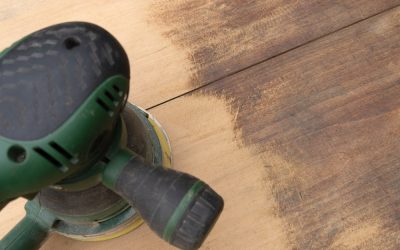
School floor sanding and restoration in South London SW19. This before-and-after project showcases the transformation of a worn solid wood plank floor in a school canteen, with professional sanding, repairs and refinishing to restore its natural appearance and shine.
Why School Timber Floors in SW19 Need Specialist Attention
Schools are harder on timber flooring than most commercial offices. A reception classroom might have twenty or thirty children moving chairs, pulling out storage trays and working on the floor throughout the day. Add playground grit, spilled drinks and repeated damp cleaning, and the protective lacquer wears considerably faster around entrances, desks and circulation routes.
Across Wimbledon and South Wimbledon, educational buildings range from Victorian conversions with suspended timber joists to Edwardian institutional blocks, post-war classrooms and modern campus extensions. Older properties around Wimbledon Village and the Wimbledon West Conservation Area may contain original pitch pine boards or traditional hardwood block flooring. These need a different repair method from modern engineered oak installed over a concrete slab.
We also consider access and environmental conditions. A school building near Wimbledon Broadway may have restricted loading arrangements, while premises off Merton High Street or around Haydons Road can have limited space for machinery, waste collection and safe material storage. These details matter when a project must be completed before children return on Monday morning.
Common Structural and Safety Problems
- Open board joints: Gaps collect crumbs, grit and cleaning residues, making routine hygiene harder and potentially catching small objects or footwear.
- Worn slip-resistant finishes: Polished traffic lanes, unsuitable cleaning products and surface contamination can change underfoot grip, particularly around entrances and corridors.
- Moisture ingress: Leaking pipework, damp subfloors and over-wet cleaning can cause parquet blocks to lift or suspended boards to cup.
- Loose parquet: Failed adhesive beneath individual blocks can lead to movement, clicking, raised edges and eventual breakage.
- Exposed fixings and splinters: Raised nail heads, broken board edges and damaged thresholds require repairs before sanding.
- Chemical deterioration: Repeated exposure to unsuitable alkaline cleaners, strong disinfectants or excessive moisture can prematurely damage certain coatings.
A domestic floor polish won’t correct these faults. Applying a glossy maintenance product over a failing school floor can conceal the damage temporarily, interfere with future lacquer adhesion and alter slip resistance. On commercial premises, preparation and the correct coating specification are worth considerably more than a quick cosmetic shine.
Our School Floor Sanding and Restoration Process
The first job is to establish the condition of the timber rather than immediately put a sanding machine on it. Schools often have several generations of flooring in the same building, and what’s suitable for solid oak parquet may be completely wrong for thin engineered boards or heavily sanded Victorian pine.
Step 1: Subfloor Audit, Timber Identification and Moisture Testing
We start by examining the floor construction, previous coatings, movement at board joints and signs of historic water damage. Species identification is important: quartersawn oak, pitch pine and teak have different grain structures, densities and responses to coatings. Teak and other naturally oily timbers, for example, may require additional adhesion checks before a waterborne lacquer system is specified.
For timber over concrete, subfloor moisture is assessed using appropriate hygrometer testing, with results interpreted against the flooring and adhesive manufacturers’ requirements. Suspended wooden floors need checks for ventilation, damp joist ends and moisture differences between boards. We don’t simply seal over damp timber, as trapped moisture can cause cupping, adhesive failure and coating defects later.
Existing sanding depth also matters. Original tongue-and-groove boards may have been sanded several times already, leaving limited timber above the tongue. Where the remaining thickness is insufficient, isolated board replacement or a less aggressive refurbishment is safer than another full cut.
Step 2: Timber Repairs, Re-bonding and Resin-Slurry Gap Filling
Loose parquet blocks are lifted where necessary, the failed adhesive is removed and the subfloor is prepared before re-bonding. Depending on the substrate, timber movement and product compatibility, a silane-based flexible parquet adhesive may be specified. Its elasticity helps accommodate normal wood movement without relying on the brittle bonding methods found in some older installations.
For sound floors with narrow, stable joints, resin-slurry gap filling combines compatible filler resin with fine sanding dust to close minor openings. It’s effective on suitable parquet and tight board joints, but it isn’t a permanent answer to large seasonal gaps in moving floorboards. Wider gaps may require timber slivers, replacement sections or an approved flexible joint treatment.
In older Wimbledon classrooms, repairs may also involve securing lifted boards, countersinking fixings, replacing damaged pitch pine and easing proud joints. We aim to preserve serviceable original timber rather than remove it unnecessarily. Where an older floor contains unknown black adhesive or suspicious historic materials, disturbance is held back until the material has been assessed.
Step 3: HEPA Dust-Controlled Sanding and Surface Preparation
On suitable solid timber floors, a Lägler Hummel belt sander provides controlled, progressive removal of worn lacquer and damaged surface wood. Edges, corners, stair details and areas beneath fixed furniture require smaller sanding equipment. Abrasive grades are selected according to the floor’s condition, with careful progression to avoid deep scratches or excessive timber removal.
Commercial educational sites need proper dust containment. Our specified dust-control approach uses compatible extraction equipment, including HEPA H14 filtration where required by the dust-risk assessment, together with protected doorways and controlled working zones. H14 filtration does not make sanding completely dust-free, so equipment maintenance, suitable respiratory protection and thorough final cleaning remain essential.
Before finishing, the floor is vacuumed, checked under good lighting and prepared to the coating manufacturer’s required abrasive grade. Any residual dust, wax, silicone polish or cleaning contamination can interfere with adhesion. Skipping this stage is one of the quickest ways to end up with a peeling finish.

Step 4: High-Traffic Finishes, 2K Lacquers and Anti-Slip Coatings
For most busy school corridors, classrooms and assembly areas, a commercial two-component waterborne polyurethane lacquer is usually worth considering. These 2K systems use a measured hardener containing a cross-linking catalyst to form a tougher cured coating than ordinary single-component domestic products. Mixing ratio, pot life, application rate and environmental conditions must follow the manufacturer’s technical data sheet.
One established example is Bona Traffic HD, a commercial waterborne lacquer designed for heavily used timber floors. Its published guidance allows light use after approximately six hours and full traffic after around twelve hours under specified conditions, although additional precautions apply to floor coverings, damp cleaning and the placement of heavy furniture.
For suitable teaching rooms, studios or less heavily trafficked spaces where an oiled appearance is preferred, we may discuss hardwax oil alternatives such as products from Osmo’s professional flooring range. These provide different maintenance and localised repair possibilities, but they aren’t automatically the best choice for a heavily used corridor. The right answer depends on cleaning routines, downtime, timber species and the finish’s documented performance.
Entrance areas, sloping routes and circulation zones may justify a specifically tested anti-slip coating or additive. Slip assessment should reflect the actual conditions of use, not merely the description on a tin. A coating described as anti-slip does not, by itself, prove that an installed school floor is safe when wet.
Slip Resistance and Coating Safety
Where slip performance is critical, we recommend a documented assessment using an appropriate pendulum test method, including BS 7976-2 and current UK Slip Resistance Group guidance, with BS EN 16165 considered where applicable. A Pendulum Test Value of 36 or above is generally associated with low slip potential in the tested condition, but it is not a universal legal pass mark. Wet and dry readings, footwear, contamination and cleaning procedures all affect the assessment.
Product selection also involves reviewing safety data sheets, VOC information and independent emissions classifications. EMICODE EC1 Plus is a particularly stringent low-emission classification for qualifying installation products, but the rating must be verified for the exact adhesive or system being used. A waterborne product should never be assumed to carry EC1 Plus certification without documentation.
Step 5: Aftercare, Cleaning and Planned Maintenance
A properly restored floor can still deteriorate quickly if the cleaning regime is wrong. We recommend manufacturer-approved neutral cleaners, well-controlled moisture levels during mopping and effective entrance matting to prevent grit being carried across the surface. Abrasive pads, inappropriate polish and strong chemical mixtures should be avoided unless specifically approved for the coating.
Maintenance should focus on the first areas to wear: classroom entrances, corridor junctions, desk rows and chair movement zones. A periodic inspection can identify localised lacquer wear before dirt reaches bare timber. Where the coating remains sound, a compatible clean, abrade and recoat programme may postpone the need for another complete sanding.
Working Around School Hours, Safeguarding and Term Dates
School floor sanding isn’t simply a matter of arriving with machinery and clearing a room. Site access, electrical supply, fire exits, cleaning contractors, safeguarding procedures and the movement of furniture all need agreeing before work begins. Where a school remains operational, work areas must be securely segregated and inaccessible to pupils.
Half-term and summer holiday programmes are often the most practical for complete classroom blocks or sports areas. Overnight shifts can work for smaller spaces where drying conditions are controlled and the coating system permits reopening. We build in time for inspection and curing rather than promising that every floor will be ready the following morning.
| Working Shift | Operational Benefits | Facility Suitability |
|---|---|---|
| Overnight After teaching hours | Reduced interference with lessons and daytime movement. Suitable for contained works where preparation, ventilation and coating cure times can be accommodated. | Tuition centres, reception offices, staffrooms, small classrooms and administrative areas. |
| Weekend Phased Friday evening to Sunday | Provides a longer uninterrupted working period for repairs, sanding, multiple coats and controlled drying before reopening. | Primary schools, nurseries, independent schools, colleges, academies and teaching studios. |
| Sectional Rooms or zones in sequence | Allows unaffected parts of a building to remain operational while work zones are securely isolated. | Universities, larger campuses, sixth-form centres, special education facilities and multi-building schools. |
Drying and curing are not the same thing. A floor may be suitable for carefully controlled light foot traffic before it has developed its full chemical and mechanical resistance. Heavy desks, wheeled furniture, rugs, protective coverings and damp cleaning may need to remain off the surface longer, according to the selected coating’s technical instructions.
Temperature, relative humidity and ventilation can alter the programme substantially. An unheated hall in February won’t behave like a classroom in July. We allow for these conditions when specifying coats and planning the handover.

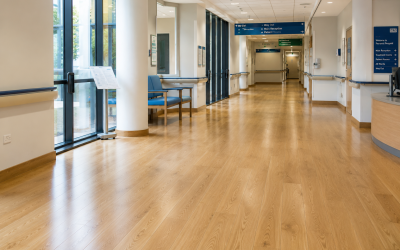
School floor sanding in South London SW19. Our professional floor sanding and restoration service transforms worn herringbone parquet flooring, restoring its natural wood appearance with a smooth, durable finish ideal for busy school environments.
Health, Safety and Documentation for Educational Sites
Educational buildings require a more disciplined working arrangement than an empty domestic property. Before work starts, the school or facilities manager should receive site-specific Risk Assessments and Method Statements (RAMS), relevant COSHH assessments and information about the products being applied. We also establish emergency access, waste arrangements and any restrictions relating to working near occupied areas.
Our site planning addresses the following requirements:
- RAMS: Documented work sequence, hazard controls, machinery arrangements and segregation of occupied spaces.
- COSHH: Assessment of coating components, hardeners, adhesives, cleaning agents and airborne wood dust.
- CSCS: Appropriately carded personnel where required by the construction site’s access rules, with competency and training evidence checked against the work involved.
- Dust protection: Appropriate local extraction, filtration, respiratory protection and cleaning procedures.
- Slip safety: Consideration of BS 7976-2, BS EN 16165 and appropriate site-specific pendulum testing.
- Insurance: Commercial public liability cover and relevant insurance documentation to be confirmed before appointment.
- Safeguarding: Agreed contractor access, supervision, identification and any necessary vetting requirements.
We also consider noise-sensitive rooms, alarm systems, ventilation routes and the movement of materials through shared corridors. On larger projects, a nominated site contact should agree access and sign off each completed section. This avoids uncertainty when several contractors are working on the same premises during a school closure.
School Floors We Restore Across Wimbledon and South London
The requirements of a nursery playroom are different from those of a university teaching room or a school sports hall. The finish must suit how the space is occupied, cleaned and maintained. We therefore assess each area by use rather than specifying one coating for the whole building.
- Nurseries, preschools, kindergartens and Montessori settings: Low-odour products, cleanable surfaces, secure board edges and carefully planned reopening.
- Primary and elementary schools: Classroom floors, reading areas, assembly halls, corridors and timber entrance zones.
- Secondary and high schools: Heavily used circulation areas, dining spaces, teaching rooms and specialist departments.
- Private, public, independent, boarding and international schools: Restoration of traditional floors, period parquet, dormitory areas and institutional interiors.
- Academies and special education schools: Carefully phased work with attention to accessibility, predictable handovers and safeguarding arrangements.
- Colleges, sixth-form colleges and universities: Lecture rooms, seminar spaces, libraries, studios and common areas.
- Vocational training centres and technical institutes: Teaching spaces requiring finishes selected around specific levels of wear and contamination.
- Music schools, art schools and language schools: Timber floors in rehearsal rooms, studios and teaching areas, with appropriate finish and use assessments.
- Sports academies: Timber sports surfaces where coating compatibility and relevant sports-floor performance requirements must be considered.
- Tuition centres, tutoring academies and adult learning facilities: Small-room restoration, weekend programmes and phased refurbishment.
- After-school clubs, childcare and daycare centres: Repair and sealing schedules designed around restricted closures and daily cleaning.
For dedicated sports flooring, ordinary commercial lacquer isn’t necessarily suitable. Where the facility needs sports performance certification, the complete flooring system and any refinishing treatment must be evaluated against applicable requirements, including BS EN 14904 where relevant. Surface grip, ball behaviour and the underlying floor’s construction need to be taken into account.
Local School Floor Sanding Coverage in SW19
Our South London service covers Wimbledon town centre, Wimbledon Village, South Wimbledon, Wimbledon Park, Colliers Wood and nearby parts of the London Borough of Merton. We also assess projects around Haydons Road, Merton Abbey, Wimbledon Chase and the adjoining SW17, SW18 and SW20 districts.
Properties around Wimbledon Village and older residential streets can contain traditional timber floors laid over ventilated subfloors, while converted buildings near the Broadway often have mixed construction and earlier repairs. Around Merton Abbey Mills and the wider Colliers Wood area, adaptation and redevelopment have produced another mixture of floor types. Checking the actual structure is more reliable than assuming that every older-looking timber floor was installed in the same way.
For sites close to Wimbledon station, Wimbledon Common or busy local high streets, delivery timing and parking arrangements can affect the working day. We discuss those practicalities during the survey so the quotation reflects the real site conditions rather than just the measured floor area.
School Floor Sanding Prices in South London, SW19
Commercial floor sanding costs depend on timber condition, the amount of repair work, floor area, coating specification and access arrangements. A clear, unobstructed school hall is generally more efficient to sand than several classrooms filled with fitted furniture and awkward corners. Out-of-hours requirements, extensive parquet repairs or specialist slip-resistant finishes can also affect the final figure.
As a starting point, our published floor sanding prices list sanding-only work from £22 per square metre and sanding with clear lacquer from £25 per square metre. These are guideline rates, not a fixed quotation for a school, and commercial-grade finishing systems, repairs and site-specific requirements may be additional.
For an initial estimate, send us the approximate floor dimensions, photographs of the worn areas and details of your preferred closure dates. We can provide an initial assessment from photographs or video before arranging a physical site survey where needed. The final written quotation should identify the agreed preparation, repairs, finish, number of coats, access arrangements and exclusions.
If you’d like to see examples of timber restoration and finished flooring, browse our floor sanding gallery. It gives a useful indication of the range of timber appearances and finishes before choosing a specification for your own premises.
Why Choose Floor Sanding South London for Your Educational Premises?
There is a difference between making a floor look better and returning it to a condition suitable for another period of hard commercial use. Correct moisture checks, stable repairs, disciplined sanding and a compatible coating system all contribute to that result. We focus on work that can be maintained properly by the school’s own cleaning and facilities teams.
We understand that a school caretaker, estate manager or headteacher needs clear answers about access, noise, dust, drying conditions and the date each room can be handed back. A written scope, planned working sequence and appropriate safety documentation make the project easier to manage. CSCS credentials, insurance cover and any additional site-specific documents should be checked and supplied as part of the pre-start arrangements.
Our quotation process begins with a discussion and photographs or video of the existing floor, followed by a site inspection where the condition or complexity calls for it. We explain whether sanding, localised repairs, maintenance recoating or partial replacement is the sensible option. That way, the school can compare costs against the actual work required.
Frequently Asked Questions About School Floor Sanding
Can school floors be sanded during half-term?
Yes, provided the floor area, repair requirements and coating cure times fit the available closure. Smaller classrooms may be practical over a short break, while extensive parquet repairs or a large hall may require longer. We assess the programme before agreeing a return-to-use date.
Is the sanding process completely dust-free?
No mechanical sanding process should be described as completely dust-free. Professional extraction and suitable HEPA filtration can substantially reduce airborne dust, while containment, cleaning and appropriate respiratory protection address remaining exposure risks. This is particularly important in schools with sensitive occupants and adjacent occupied rooms.
How long before pupils can walk on a newly lacquered floor?
It depends on the exact product, number of coats, room temperature and ventilation. Some fast-curing commercial 2K lacquers permit light foot traffic after approximately six hours and fuller use after around twelve hours under specified conditions. Heavy furniture, mats, covering materials and wet cleaning may require a longer restriction, so the manufacturer’s instructions govern the handover.
Can you restore old parquet blocks without replacing the whole floor?
Often, yes. Loose or damaged individual blocks can frequently be lifted, cleaned, repaired or replaced and re-bonded before the complete floor is refinished. The deciding factors are the condition of the timber, remaining thickness, adhesive residues and subfloor stability.
Are waterborne lacquers suitable for nurseries and childcare centres?
Suitable low-emission waterborne products can be a good option, but selection must be based on the specific product’s safety and emissions documentation. Children should not have access to application areas, and rooms should only reopen once drying, curing, ventilation and cleaning requirements have been satisfied. The coating’s intended use and the nursery’s cleaning procedures must also be considered.
Can a school floor be refurbished without full sanding?
Yes, where the existing coating remains sound and a compatible maintenance system is available. Cleaning, abrasion and recoating can be a cost-effective alternative to removing the full finish. Peeling lacquer, exposed timber, moisture damage or loose boards need more substantial attention first.